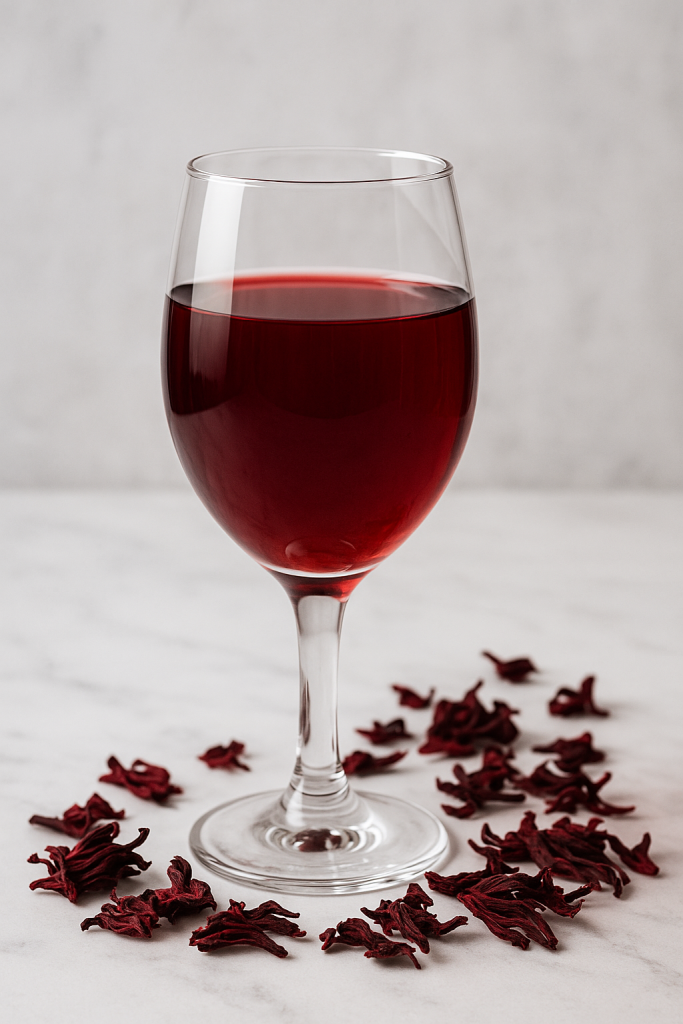
Steep 85–90 g dried hibiscus in 3.5 L hot water, dissolve 1.0–1.1 kg sugar, cool, add nutrients + wine yeast, ferment at 18–22 °C to SG 0.996–0.990, rack, stabilize, backsweeten to taste, bottle when clear.
Why hibiscus wine is special
Hibiscus (Hibiscus sabdariffa; “roselle,” “sorrel,” “bissap,” “agua de Jamaica”) brings natural tartness (citric/malic/hibiscus acids) and stable red anthocyanins that pop at acidic pH. Handle acidity smartly and you get electric color with food-friendly brightness instead of harsh sourness.
Science bites that guide this recipe
- Acid & pH: Roselle calyces are rich in organic acids; hibiscus infusions and blends often land around pH ~2.5–3.1. For wine, aim pH 3.2–3.5—bright but not enamel-stripping. Start without acid blend, then adjust after primary if needed. (Source)
- Color: Anthocyanins hold color best in acidic conditions; neutral pH dulls color. Keep pH in the wine range to lock in that ruby hue. (Source)
- Calyces in the ferment? Keeping calyces in the must during primary increases phenolics and bioactives and can help sensory attributes. We’ll ferment on the petals 3–5 days in a mesh bag, then remove. (Source)
- Target gravity: An OG ~1.090 yields ~12% ABV and ages well.
One-Gallon Hibiscus Wine (1 US gal / 3.8–4.0 L) — Make Wine Lab Method
Batch size: 1.0 gallon (3.8 L)
ABV target: ~12%
Time: 6–8 weeks to bottle-ready (improves with 1–3 months aging)
Ingredients (metric + US)
- Dried hibiscus (roselle) calyces: 85–90 g (≈ 3 oz)
- Granulated sugar: 1,000–1,100 g (≈ 2.2–2.4 lb) — enough to hit OG 1.088–1.094
- Clean water: to 3.8–4.0 L (1 gal)
- Yeast nutrient: 3–4 g total (e.g., Fermaid-O or DAP blend; split doses)
- Pectic enzyme: 1/2 tsp (≈2 g) (helps clearing)
- Optional tannin: 1/4 tsp or 1 cup strong black tea (for structure)
- Potassium metabisulfite (K-meta): per label (≈ 1 Campden tablet/gal)
- Potassium sorbate (for backsweetening later): typical ~1/2 tsp per gallon (follow label)
- Yeast (choose one):
- Lalvin 71B-1122 (softens malic acid; rounder finish),
- Red Star Cote des Blancs (floral, slower),
- EC-1118 (robust, very dry).
Equipment
Primary fermenter (food-grade bucket or wide-mouth 1-gal), 1-gal carboy, airlock, hydrometer + test jar, sanitizer, fine-mesh bag for calyces, siphon, bottles/corks.
Step-by-step
- Sanitize everything. Oxidation and contamination ruin color and aroma; don’t skip.
- Make hibiscus “tea.” Heat ~3.5 L water to ~85–90 °C (185–194 °F). Add calyces in a mesh bag; steep 20–30 min, no rolling boil (protects aromatics). Lift the bag and gently press.
- Sugar & make must. Stir in 1,000–1,100 g sugar until dissolved. Top up to 1.0 gal. Cool must to 20–22 °C (68–72 °F).
- Measure & set targets. Take OG with a hydrometer. Adjust with sugar or water to land 1.088–1.094 (≈12% ABV).
- Additions at pitch: Stir in pectic enzyme and half your nutrient dose. Do not add acid blend now. If using tannin/tea, add now.
- Yeast. Rehydrate/pitch your chosen yeast. Fit airlock. Ferment at 18–22 °C (64–72 °F).
- Optional: ferment on calyces (phenolics boost). You can leave the bag in for 3–5 days, dunk daily with a sanitized spoon, then remove. This can enhance phenolics and complexity.
- Staggered nutrient. Add the second half nutrient at 24 hours (or around 1/3 sugar depletion).
- Primary to secondary. When SG ≤ 1.010, rack off the lees into a 1-gal carboy. Fit airlock.
- Finish ferment & clear. Let it drop to SG 0.996–0.990 and clear naturally 1–3 weeks. Cold-crash if needed.
- Stabilize (for backsweetening). When fully dry and degassed, add K-meta (per label) and potassium sorbate (typ. ~1/2 tsp/gal) and wait 24–48 h.
- Backsweeten to balance (optional but recommended). Make a simple syrup; add small increments, tasting until vivid fruit balances acidity (common finish SG 1.002–1.010).
- Bottle & rest. Bottle when brilliantly clear. Enjoy young from 6–8 weeks, but 2–3 months of bottle age softens edges.
Targets & checkpoints
- OG: 1.088–1.094 → ABV ≈ 12%
- Primary temp: 18–22 °C
- pH (ideal range): 3.2–3.5 (measure after primary; adjust if needed)
- Dry finish SG: 0.996–0.990
- Balanced semi-dry (optional): 1.002–1.010
Why no acid blend at the start? Hibiscus already brings citric/malic/hibiscus acids. Start neutral; tune acidity post-primary so you keep color pop without a puckering mid-palate.
Variations (safe tweaks that work)
- Caribbean “sorrel” spices: Add grated ginger, allspice, clove, and orange peel to the hot steep; remove with the calyces at day 3–5 to avoid bitterness. (Inspired by traditional sorrel drinks.)
- Hibiscus-mead (hydromel/melomel): Swap part or all sugar for honey. Target the same OG; many makers like 1.090 for ~12% ABV.
- Fruit lifts: Raspberry, cherry, or pomegranate (250–500 g) at primary for layered red fruit; rack off fruit at SG ~1.010 to keep it clean. (Community examples exist, but results vary.)
Troubleshooting & Pro Tips
- Too tart? Back-sweeten in tiny steps; a pinch of tannin or short oak chip contact adds perceived balance without cloying.
- Color fading or brown tones? Protect from oxygen; keep pH in the wine zone (3.2–3.5).
- Stuck fermentation: Re-aerate early, check temp, add a fresh nutrient dose, or repitch with EC-1118.
- Haze that won’t drop: Ensure pectic enzyme was added; cold-crash; if needed, fine with kieselsol/chitosan.
Food Pairings & Serving
Chilled to 10–12 °C with jerk chicken, goat curry, birria tacos, aged Manchego, or as a spritz (soda + orange twist). Cultural context: hibiscus drinks (sorrel, bissap, agua de Jamaica) have deep Afro-diasporic roots—great story material in your intro.
Recipe Card
Hibiscus Wine (Roselle/Sorrel) — Make Wine Lab
Yield: 1 gallon (3.8–4.0 L) • Time: 6–8 weeks • ABV: ~12%
Ingredients:
Dried hibiscus 85–90 g (3 oz); sugar 1,000–1,100 g (2.2–2.4 lb); water to 1 gal; yeast nutrient 3–4 g (split); pectic enzyme 1/2 tsp; optional tannin 1/4 tsp or 1 cup strong black tea; K-meta & K-sorbate (per label); wine yeast (71B or Cote des Blancs or EC-1118).
Method:
- Sanitize. 2) Steep hibiscus in ~3.5 L at 85–90 °C for 20–30 min (in a mesh bag). 3) Dissolve sugar; top to 1 gal; cool to 20–22 °C. 4) Check OG 1.088–1.094; adjust. 5) Add pectic enzyme + half nutrient (+ tannin if using). 6) Pitch yeast; 18–22 °C. 7) (Optional) Leave calyces bag in 3–5 days, dunk daily, then remove. 8) Add remaining nutrient at 24 h. 9) When SG ≤ 1.010, rack to carboy. 10) Finish to SG 0.996–0.990 and clear. 11) Stabilize (K-meta + sorbate). 12) Backsweeten to taste (common finish SG 1.002–1.010), bottle, rest.
Notes: Start without acid blend; adjust pH to 3.2–3.5 after primary for color/brightness balance.
FAQ
Is hibiscus the same as roselle/sorrel/bissap?
Yes—culinarily these refer to Hibiscus sabdariffa calyces used across Africa, the Caribbean, and Latin America.
Why target OG ~1.090?
It yields ~12% ABV—stable for aging and flavor integration in country wines.
Should I add acid blend at the start?
Skip it initially. Hibiscus is already acid-rich; adjust after primary to pH 3.2–3.5 if needed.
Can I ferment with the calyces in?
Yes. 3–5 days on the calyces (in a bag) can improve phenolics and acceptance; then remove to avoid bitterness.
What yeast is best?
71B gently reduces malic acid (rounder). Cote des Blancs for floral, slow ferments; EC-1118 if you need a strong finisher.
How do I backsweeten safely?
Stabilize with K-meta + potassium sorbate (typ. ~1/2 tsp/gal, follow your brand’s label), wait 24–48 h, then add syrup to taste.
For another foraged flower wine with a lighter, golden profile, our dandelion wine recipe turns a common backyard weed into a surprisingly elegant country wine — an excellent companion project if you enjoy brewing from wild ingredients.
If you like experimenting with floral specialty wines, the elderflower champagne recipe produces a naturally fizzy, delicate result with minimal ingredients and a beautifully aromatic finish.
Hibiscus wine sits alongside dandelion wine, elderflower champagne, and more in our specialty wines collection — all unusual, all worth exploring.
If you enjoy fermenting flowers and fruits, our fruit wine recipes hub covers 20+ fermentable fruits and flowers you can turn into wine at home.

Apple Mulled Wine: A Cozy Twist on a Winter Classic

Pomegranate Mulled Wine: The Ultimate Guide

Mulled Wine: A Complete Guide
Banana Wine: The Tropical Beverage Revolutionizing the Wine World

The Ultimate Guide to Japanese Plum Wine: Discovering Umeshu

Blueberry Wine: A DIY Guide for Delicious Summer Drinks!

The Ultimate Sunflower Wine Recipe with Petals: A Delightful Floral Elixir

Mulberry Wine Recipe: How to Make It at Home
