

Blackberry wine is one of the best homemade berry wines because it captures the deep color, fresh acidity, and rich fruit character of ripe blackberries. You can use fresh or frozen blackberries, and both options work very well. Fresh berries are excellent when they are harvested at peak ripeness, but frozen berries are often more convenient and can actually help improve juice extraction.
For a one-gallon batch of blackberry wine, you will need about 4 pounds of blackberries, enough sugar to reach the desired starting gravity, filtered water, wine yeast, yeast nutrient, pectic enzyme, and basic winemaking additives for stabilization.
Fresh Berries
If you are using fresh blackberries, choose berries that are fully ripe, dark, aromatic, and free from mold or fungus. Do not use damaged, rotten, or questionable fruit, because poor-quality berries can create off-flavors in the finished wine.
Wash the berries gently with clean water and remove any leaves, stems, insects, or debris. After washing, drain them well before freezing.
Freeze for One Week
Freeze the blackberries for at least one week before making the wine. Freezing helps break down the cell walls of the fruit, making it easier to extract juice, color, aroma, and flavor during fermentation.
When you are ready to begin, thaw the berries for about 24 hours. You can use only blackberries, or you can blend them with other berries such as raspberries, blueberries, or strawberries. However, for a classic blackberry wine, blackberries should remain the main fruit.
Prepare for Fermentation
Once the berries are thawed, crush them gently using a potato masher, food mill, or clean hands. The goal is to break the fruit open without grinding the seeds too aggressively, because crushed seeds can add bitterness.
Place the crushed blackberries into a sanitized mesh bag. Keeping the pulp inside a mesh bag makes the process cleaner and easier later, especially when it is time to remove the fruit from the primary fermenter.
Keep the Pulp in a Mesh Bag
Place the mesh bag with the crushed blackberry pulp into a clean and sanitized primary fermentation vessel. Add any pressed juice from the berries into the fermenter as well.
For a one-gallon batch, add enough filtered water to bring the total volume close to 1 gallon. Do not fill the fermenter completely to the top during primary fermentation, because the must will foam and bubble actively.
Add 1 crushed Campden tablet or 1/16 teaspoon potassium metabisulfite. This helps suppress wild yeast and unwanted microorganisms before you add your selected wine yeast.
Cover the fermenter with a clean towel, loose lid, or lid with an airlock, and let the must rest for 24 to 48 hours.
Ingredients for 1 Gallon
For one gallon of blackberry wine, use the following ingredients:
- 4 lb fresh or frozen blackberries
- Filtered water, enough to reach 1 gallon total volume
- 1.75 to 2.5 lb white sugar, adjusted by hydrometer reading
- 1 crushed Campden tablet
- 1/2 teaspoon pectic enzyme
- 1 teaspoon yeast nutrient
- 1 teaspoon acid blend or 1 to 2 tablespoons lemon juice, optional and adjusted to taste
- 1/4 teaspoon wine tannin, optional
- 1 packet wine yeast, such as Lalvin 71B, Red Star Côte des Blancs, or Lalvin EC-1118
- 1/2 teaspoon potassium sorbate, for stabilization before back-sweetening
- 1 additional Campden tablet, for stabilization before bottling if back-sweetening
Wait Before Adding Yeast
After adding the Campden tablet, wait at least 24 hours, and preferably up to 48 hours, before pitching the yeast. This gives the sulfite time to reduce wild microbial activity while still allowing the commercial wine yeast to perform well later.
During this waiting period, keep the fermenter covered and protected from insects, dust, and contamination.
Adjust the Starting Gravity
Before adding the yeast, test the must with a hydrometer. For a lighter blackberry wine, adjust the starting gravity to around 1.070 to 1.080. This will usually produce a wine around 9% to 10.5% ABV.
For a fuller-bodied blackberry wine, adjust the starting gravity to around 1.085 to 1.095. This will usually produce a wine around 11% to 12.5% ABV, depending on the final gravity.
Add sugar gradually, stirring well until fully dissolved. A common starting point is about 2 pounds of sugar per gallon, but the exact amount should be adjusted using a hydrometer, because the natural sugar content of the berries can vary.
You can use white sugar, honey, maple syrup, or another fermentable sugar source. However, if you want a clean blackberry flavor, plain white sugar is usually the best choice.
Add Acid and Pectic Enzyme
Add 1/2 teaspoon of pectic enzyme to the must. This is highly recommended for blackberry wine because berries contain pectin, which can cause haze. Pectic enzyme helps break down pectin, improves juice extraction, and supports better clarification.
You may also add 1 teaspoon of acid blend or 1 to 2 tablespoons of lemon juice if the must tastes flat. Blackberries are naturally acidic, so do not overdo it. The wine should taste bright and fruity, not harsh or sour.
If desired, add 1/4 teaspoon of wine tannin to improve structure. This is optional because blackberries already contain some natural tannins.
After adding pectic enzyme, wait about 12 to 24 hours before pitching the yeast.
Pitch the Yeast
Now the blackberry must is ready for fermentation. Add 1 teaspoon of yeast nutrient and pitch your wine yeast.
Good yeast choices for blackberry wine include Lalvin 71B, which can soften acidity and enhance fruit character; Red Star Côte des Blancs, which works well for aromatic fruit wines; or Lalvin EC-1118, which is strong and reliable.
For a one-gallon batch, you can use the full packet of yeast or about half a packet. Most wine yeast packets are designed for up to five gallons, but using the full packet in one gallon is generally fine and can help ensure a strong fermentation.
Sprinkle the yeast directly on top of the must, or rehydrate it according to the yeast manufacturer’s instructions.
Primary Fermentation
After pitching the yeast, stir the must well with a sanitized spoon. Cover the fermenter with a lid fitted with an airlock, or use a clean towel secured with a rubber band during the first vigorous stage.
Keep the fermenter in a warm place, ideally around 68°F to 75°F, or 20°C to 24°C. Primary fermentation usually lasts about 7 to 10 days.
Stir the must once or twice per day during active fermentation, gently pressing the mesh bag down to keep the fruit wet. This helps extract color and flavor while reducing the risk of spoilage on the exposed fruit cap.
When the bubbling slows down and the specific gravity reaches about 1.020 or lower, it is time to transfer the wine to secondary fermentation.
Secondary Fermentation
Open the primary fermenter and carefully remove the mesh bag with the blackberry pulp. Let it drain, but do not squeeze it too aggressively, because this can extract bitterness or excess solids.
Rack the young wine into a sanitized one-gallon glass carboy. Leave the heavy sediment behind. Top off the carboy with filtered water, blackberry juice, or a compatible finished wine until the liquid is within about 3/4 inch of the bung.
Too much headspace can expose the wine to oxygen and increase the risk of oxidation. Seal the carboy with a bung and airlock.
Let the wine ferment and clarify in a cool, dark place until bubbling stops completely and the gravity reaches 1.000 or lower.
Clarifying and Aging
Once fermentation is complete, you can rack the wine into another clean carboy to age and clarify further. Blackberry wine often improves significantly with time, so patience is important.
Clarification may take one to three months, depending on the fruit, pectin level, yeast, and temperature. If you want faster clarification, you can use a fining agent such as bentonite, kieselsol and chitosan, or another wine clarifier according to the manufacturer’s instructions.
For best flavor, allow the wine to age for at least 3 months before bottling, although it can be bottled earlier if it is completely clear, stable, and finished fermenting.
Taste Before Bottling
Before bottling, taste the finished blackberry wine. It may be dry, tart, or slightly sharp at this stage. A good blackberry wine should taste like ripe fresh berries, with a balance of fruit, acidity, and light tannin.
If the wine tastes too dry, you can back-sweeten it with sugar, simple syrup, honey, or blackberry juice. However, adding sugar can restart fermentation if the wine is not stabilized first.
Stabilization
If you plan to back-sweeten the wine, stabilize it first. For one gallon, add 1/2 teaspoon potassium sorbate and 1 crushed Campden tablet. Stir gently and allow the wine to rest for at least 24 hours before adding any sweetener.
To back-sweeten, add sugar syrup little by little until the flavor is balanced. A simple syrup can be made by dissolving 1 cup sugar in 1/2 cup water, heating gently, then cooling before adding it to the wine.
Add the syrup gradually, taste as you go, and avoid making the wine too sweet. Blackberry wine is usually best when it remains fruity, bright, and balanced.
Bottling
Once the wine is clear, stable, and adjusted to your taste, it is ready to bottle. Clean and sanitize your bottles, corks, siphon, and bottling equipment.
Rack the wine carefully into the bottles, leaving sediment behind. Fill each bottle to the base of the neck and cork using a corker.
Store the bottles upright for a few days to allow the corks to expand, then store them on their side in a cool, dark place.
Aging
Blackberry wine can be enjoyable after about 4 to 6 months, but it is usually much better after 9 to 12 months of aging. Over time, the sharpness softens, the fruit character becomes smoother, and the wine develops better balance.
Patience is one of the most important ingredients in homemade fruit wine.
Videorecipe for blackberry wine
Characteristics
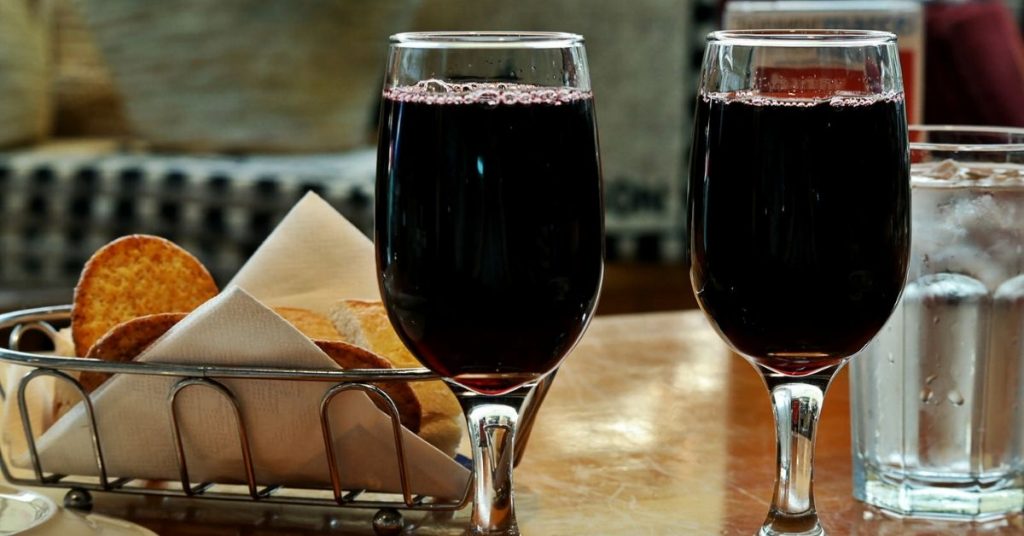
This wine is a very crisp and clear wine with easy clarification. However, the fermentation process produces an amount of carbon dioxide. Therefore, pay attention to the gas exhaust to avoid overpressure in the fermenter.
Blackberry wine is perfect for the beginning wine enthusiast or for those who like a milder wine. In fact, It still contains enough character to enjoy it over again.
Also, if you ferment this wine at cold temperatures, you will get a slightly sweet wine with a deep flavor.
Benefits of blackberry wine
They are not only delicious, however, but the wines made with blackberries also have numerous health advantages. Like elderberries, they contain antioxidants that help reduce cholesterol and decrease the chance of suffering from strokes. Drinking moderate quantities of wine made from blackberries can lower the risk of developing heart disease.
The results of research studies show that blackberry wine is an efficient direct vasodilator and superior antioxidant in vitro. It was found that wines made from blackberries proved to be more potent antioxidants than red wine wines.
One cup of this wine has 30.2 milligrams of vitamin C, half the daily recommended value. Additionally, this fruit is helpful for iron deficiency and anemia, due to its mineral content consisting of iron and manganese. It also improves brain health due to the presence of antioxidants and vitamin K.
Prevention of diarrhea and stomach virus
Blackberry wine that is akin to blackberry leaves and blackberry roots can be used to treat general illness and diarrhea as well as IBS or relieve intestinal inflammation. A shot glass twice or three times daily is an ideal amount, however, it's so delicious it's difficult to restrict oneself to the amount recommended. In many regions of the United States, Blackberries are just beginning to come to the point of ripeness.
What foods go well with blackberry wine?
A typical question is what to serve blackberry wine with? Well, the flavor of blackberries is refreshing and delicious. It is possible to pair fresh blackberries with lighter dishes like apples or cherries when paired with sweet wine. It's a good match for sweetness Rieslings as well as Cabernet Sauvignons especially if you enjoy red wines.
Does the blueberry wine go bad?
If you don't use compounds such as sulfites/preservatives in your wine, the answer is yes, they will have a shelf life. In general, fruit wines "last" 2-3 years tops however it's not as if they'll spoil or anything else. This is more or less what is known as the "best by" date.
If blackberry wine has you hooked on deep, dark berry wines, our blueberry wine recipe follows a very similar process and produces a rich, antioxidant-packed wine with a slightly sweeter fruit profile and that same striking dark color in the glass.
Hibiscus Wine Recipe (Roselle/Sorrel) — Deep Red, Bright & Floral

Apple Mulled Wine: A Cozy Twist on a Winter Classic

Pomegranate Mulled Wine: The Ultimate Guide

Mulled Wine: A Complete Guide
Banana Wine: The Tropical Beverage Revolutionizing the Wine World

The Ultimate Guide to Japanese Plum Wine: Discovering Umeshu

Blueberry Wine: A DIY Guide for Delicious Summer Drinks!

The Ultimate Sunflower Wine Recipe with Petals: A Delightful Floral Elixir

Mulberry Wine Recipe: How to Make It at Home
Love making fruit wines at home? Our fruit wine recipes collection covers every fruit from strawberry to mango.