
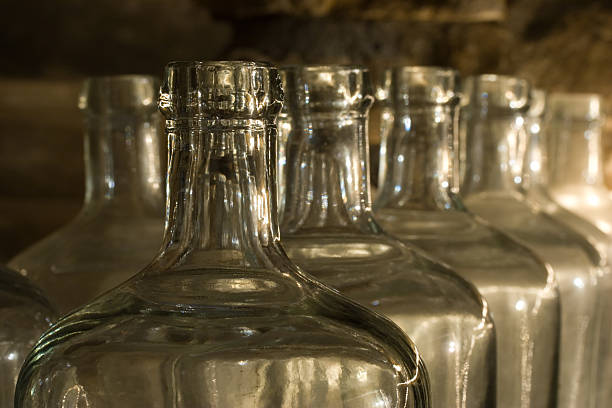
As Carlos Ocampo, founder of the Winemaking for Beginners Facebook group, I have answered hundreds of questions from members about how to clean their carboys properly. In particular, when you buy a new carboy or after fermentation stops, cleaning up is one of the most common stumbling blocks for new home winemakers.
Those rings of debris cling to the walls, and it seems like they're never going to come out no matter how hard you try. It's exhausting!
When you search the internet for how to clean a glass carboy, you'll find countless tips and chemicals that seem anything but safe. Be very careful with these products. Many of them contain chlorine, such as bleach, and these products cannot be used to clean wine-making containers.
There is no magic product that works as a carboy cleaner; but in this post, I am going to recommend a 5-step process as the best way to clean a carboy — plus everything you need to know about sanitizing, glass vs. plastic differences, and dealing with stubborn stains.
Steps to Clean a Carboy
Materials:
- OxiClean: a homemade PBW alternative that is very effective and affordable. PBW (Powdered Brewery Wash) cleaners work the same way but cost significantly more. Both clean using the power of oxygen. Avoid dish soap — it leaves soapy residue that taints wine flavor.
- Carboy brush: an L-shaped brush works best for reaching the curved bottom. You can buy a standard bottle brush and bend it — that becomes your carboy washing brush.
Procedure:
- Fill half of the carboy with warm water and add one scoop of OxiClean. Shake the carboy gently to begin loosening debris.
- Finish filling the carboy with warm water and let it soak overnight. For light buildup, 1 hour may be enough — check the walls and judge for yourself.
- Insert the brush and twist it against the walls to remove solids clinging to the glass. For plastic carboys, use light pressure only — do not scrub hard, as scratching creates grooves where bacteria can hide.
- Drain the carboy and rinse with clean water several times. Check the inner wall carefully to confirm it is free of all residue.
- Invert the carboy on a stand and allow it to air-dry completely before using or storing. Never store a damp carboy.
This is the safest way to clean a carboy. You can use this method for beer carboys or wine carboys, glass or plastic. The steps are easier in small carboys, but there are no size limitations.
How Much OxiClean Per Gallon of Water?
One scoop of OxiClean is all you need. One container can last an entire year. In general, one 4 oz. scoop cleans a 6-gallon carboy — equivalent to a 0.5% by weight concentration, as recommended by Better Bottle Co. Scale proportionally for smaller carboys: roughly half a scoop for a 3-gallon carboy.
Follow us in our Facebook group: Winemaking for Beginners
Cleaning vs. Sanitizing — Why Both Steps Are Required
This is the most important distinction in home winemaking, and the question I see most often from new members of the group. Cleaning and sanitizing are two completely different steps — and you need both.
Cleaning removes physical debris: wine lees (sediment), tartrate crystals, fruit pulp residue, and staining. OxiClean is a cleaner. It breaks down organic material using the power of oxygen. After cleaning, rinse thoroughly.
Sanitizing kills microorganisms: bacteria, wild yeast, and mold. Common sanitizers for winemaking include Star San (a no-rinse acid sanitizer), potassium metabisulfite (K-meta) solution, and sodium metabisulfite. Sanitizers cannot work effectively on a dirty surface — which is exactly why cleaning must come first.
The sequence is always: Clean → Rinse → Sanitize → Fill. Skipping the cleaning step is the most common cause of contaminated batches in home winemaking. When using Star San, do not rinse after sanitizing — it is a no-rinse product; let it drain and drip-dry in the inverted carboy.
One thing to avoid at all costs: never clean winemaking equipment with bleach. Chlorine reacts with wine compounds to produce TCA (trichloroanisole) — the chemical responsible for the musty, cardboard-like "corked" flavor. Even trace amounts of chlorine residue left after rinsing can ruin an entire batch of wine. This is not a theoretical risk — I have seen it happen in our group more than once.
Glass vs. Plastic Carboy — Cleaning Differences
The 5-step method above works for both glass and plastic (PET or HDPE) carboys, but there are important material differences to keep in mind:
Glass Carboys
- Can use a carboy brush freely — glass does not scratch from a standard brush
- OxiClean at full recommended strength (one 4 oz. scoop per 6 gallons) is safe for glass
- Glass does not absorb odors or off-flavors over time — a major advantage for wine
- Check for chips or hairline cracks before every use — a cracked glass carboy can fail under the pressure of active fermentation
- Heavy: use a carboy handle or carrier for safe transport, especially when full
Plastic (PET/HDPE) Carboys
- Use a soft cloth or dedicated bottle brush only — never use abrasive scrubbers or steel wool
- Micro-scratches create grooves where bacteria hide and are impossible to fully sanitize
- Replace a badly scratched plastic carboy — it cannot be made safe for wine again
- OxiClean at normal dilution is safe for PET plastic
- Lighter and more shatter-resistant than glass — a good starting point for beginners
Before starting any new batch, check our hydrometer guide — knowing how to read a hydrometer lets you track fermentation progress in your freshly cleaned carboy from day one.
How to Remove Stubborn Stains and Tartrate Buildup
Red wine leaves behind dark tartrate crystals that cling stubbornly to glass walls. They are not dangerous, but they harden over time and become significantly harder to remove the longer they sit between batches. Here is what actually works:
- OxiClean overnight soak — removes most tartrate staining. For heavy buildup from multiple batches, extend the soak to 24–48 hours.
- Citric acid solution — dissolve 1 tablespoon of citric acid per gallon of warm water. Excellent for mineral deposits and calcium tartrate rings. Soak for 1–2 hours, then rinse well.
- Bar Keepers Friend — works on glass carboys for very stubborn mineral staining. Apply with a damp soft cloth, let sit for a minute, then rinse extremely thoroughly. Do NOT use on plastic carboys.
- Avoid steel wool, metal scrapers, or abrasive scouring pads on any carboy material.
The most effective prevention: rinse your carboy immediately after emptying it, before the lees have a chance to dry onto the glass. Always use cool or lukewarm water for the initial rinse — hot water sets lees into the glass and makes them far harder to remove later.
When to Clean Your Carboy
- Immediately after emptying — rinse with cool water right away. Do not let lees dry on the glass.
- Before every new batch — full OxiClean soak plus sanitizing, even if the carboy appeared clean when stored.
- After any storage period — if a carboy sat unused for more than a few weeks, clean it again before use regardless of appearance.
- Whenever you detect any off-smell — sulphur, vinegar, or musty odors inside a stored carboy mean a thorough OxiClean soak is required before the carboy is safe to use again.
Proper carboy hygiene is the single most reliable way to avoid contaminated batches. For more technique guides like this one, visit the Wine Making Basics hub — covering hydrometer use, wine clarification methods, how to select a cork, and much more.
Frequently Asked Questions
Can I use bleach to clean a carboy?
No. Bleach contains chlorine (sodium hypochlorite), which reacts with wine compounds to produce TCA — the chemical responsible for the musty "corked" wine flavor. Even trace amounts of chlorine residue left after rinsing can ruin an entire batch. Use OxiClean, PBW, or B-Bright instead.
What is the difference between cleaning and sanitizing a carboy?
Cleaning removes physical debris (lees, stains, tartrate crystals) using a product like OxiClean. Sanitizing kills microorganisms (bacteria, wild yeast, mold) using a product like Star San or potassium metabisulfite. You must clean first, then sanitize — sanitizer cannot work properly on a dirty surface. Both steps are required before every new batch.
How do I remove wine stains from a glass carboy?
Soak with OxiClean overnight — this removes most tartrate staining. For persistent stains, extend the soak to 24–48 hours or use a citric acid solution (1 tablespoon per gallon of warm water). Bar Keepers Friend also works on glass for very stubborn mineral deposits. Avoid all abrasive scrubbers of any kind.
How often should I clean my carboy?
After every use and before every new batch. Rinse with cool water immediately after emptying — hot water sets lees onto glass and makes them much harder to remove. If the carboy has been stored unused for several weeks, clean it again before use even if it looked clean when you put it away.
Can I put a glass carboy in the dishwasher?
No. Glass carboys are too heavy and fragile for a dishwasher — thermal shock from hot water cycles can cause cracking. Dishwasher detergents also contain chlorine compounds and rinse aids that leave residues harmful to wine. Always clean by hand using the OxiClean method described above.