
By Carlos Ocampo | MakeWineLab
Table of Contents
- What Makes Tropical Wines Different
- Tropical Wine Comparison Table
- Best Tropical Wines for Beginners
- Tropical Wine Recipes on MakeWineLab
- Yeast and Sugar Guidance for Tropical Wines
- Acidity and Tannin Guidance
- Fermentation and Troubleshooting
- Frequently Asked Questions
- About Carlos Ocampo
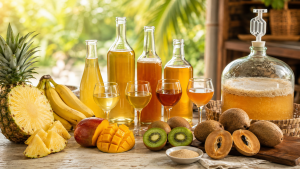
Tropical fruit was some of the most fun I've had fermenting, mostly because it behaves so differently from grapes or berries. Pineapple, banana, mango, kiwi, and sapodilla all bring big aromatics and low acid to the must, which means the winemaking approach has to shift a little from what works for a classic fruit wine.
This page collects every tropical wine recipe I've published on MakeWineLab, from the bright acidity of pineapple to the rich, almost banana-bread character you get from fermented banana. Use the comparison table to see how they differ, or jump straight to the full recipe for whatever fruit you have on hand.
This guide is part of my full Fruit Wine Recipes collection, where I cover more than two dozen fruits I've fermented at home.
What Makes Tropical Wines Different
Tropical fruits share a few traits that set them apart from the berries and orchard fruit I ferment most often. Most are naturally low in acid and low in tannin compared to grapes or tart berries, which means the finished wine tends to come out soft and round rather than crisp — that's part of the appeal, but it also means acid adjustment is almost always necessary, not optional, if you want a balanced result instead of something flat and cloying.
Tropical fruit also tends to be starchier and pulpier than berries. Banana and sapodilla in particular don't yield a free-running juice the way strawberries or grapes do — you're working with a mash more than a juice, which changes how you handle straining and clarification.
Aromatics are the other big difference. Pineapple, mango, and kiwi all carry strong, distinctive fruit aromas that can dominate a finished wine if you're not careful with yeast selection — a yeast that's too aggressive can strip some of that character away during fermentation.
Tropical Wine Comparison Table
| Fruit | Flavor Profile | Acidity | Tannin | Difficulty | Typical Fermentation | Full Recipe |
|---|---|---|---|---|---|---|
| Pineapple | Bright, sweet-tart, tropical | Medium-high | Low | Beginner | 1-2 weeks primary | Pineapple Wine Recipe |
| Banana | Rich, mellow, almost bread-like | Low | Low | Intermediate | 1-2 weeks primary | Banana Wine Recipe |
| Mango | Sweet, floral, juicy | Low-medium | Low | Beginner-Intermediate | 1-2 weeks primary | Mango Wine Recipe |
| Kiwi | Tart, green, fruit-forward | Medium-high | Low | Beginner | 1-2 weeks primary | Kiwi Wine Recipe |
| Sapodilla | Mild, malty, brown-sugar sweet | Low | Low | Intermediate | 1-2 weeks primary | Sapodilla Wine Recipe |
Fermentation times above cover primary fermentation only. Every recipe on this page also needs secondary fermentation, clearing, and bottle aging — see each individual recipe for its full timeline.
Best Tropical Wines for Beginners
If this is your first tropical batch, start with pineapple or kiwi wine. Both bring their own natural acidity to the must, which means less guesswork with acid adjustment, and both ferment predictably with a standard all-purpose yeast. Pineapple in particular is one of the most requested recipes I get, since fresh pineapple is easy to find year-round and the finished wine keeps a lot of that bright tropical character.
Mango is a close second — it's forgiving, sweet, and doesn't need much beyond a straightforward acid blend addition to balance out.
Save banana and sapodilla for your second or third batch. Both are rewarding, but their low acidity and pulpy, starchy texture mean you'll want a straightforward tropical or berry batch under your belt first, so you're comfortable managing acid additions and straining a heavier must before tackling them.
Tropical Wine Recipes on MakeWineLab
Pineapple Wine
Pineapple is where I'd point most people starting their first tropical batch. It has enough natural acidity to ferment cleanly without much adjustment, and the finished wine holds onto a genuinely bright, sweet-tart character that reads as tropical rather than generic. It's a good warm-weather batch — I usually make mine in the summer.
Banana Wine
Banana wine surprises most people who haven't tried it — it doesn't taste like banana flavoring, it ferments into something closer to a mellow, slightly nutty dessert wine. The full recipe covers how to handle the fruit's pulpy texture, since banana doesn't release juice the way most fruit does and needs a different straining approach than a berry or citrus batch.
Mango Wine
Mango is one of the sweeter, more floral wines on this page. Ripe mango brings a lot of natural sugar to the must, so the full recipe walks through how to manage your starting gravity so the finished wine doesn't come out overly heavy or cloying. It's a forgiving batch for anyone who's already made one or two fruit wines.
Kiwi Wine
Kiwi is one of the more underrated fruits for home winemaking — it's tart, green, and ferments into something genuinely refreshing. The full recipe is a good option if you want a tropical wine that leans crisp rather than sweet, and it's simple enough for a first-time winemaker to follow start to finish.
Sapodilla Wine
Sapodilla is the most niche fruit on this page, and one of my favorite lesser-known ferments. Fresh sapodilla has a malty, brown-sugar sweetness that's hard to find in more common fruit wines. It can be trickier to source than pineapple or mango, but if you have access to a specialty market that carries it, the full recipe walks through everything from prepping the fruit to fermentation.
Yeast and Sugar Guidance for Tropical Wines
Tropical fruit varies more in natural sugar than berries do — a ripe mango or banana can bring a lot of sugar to the must on its own, while pineapple and kiwi usually need a more standard sugar addition to reach a target gravity. I typically aim for a starting specific gravity between 1.085 and 1.100, which lands the finished wine around 11-14% ABV — check your actual gravity with a hydrometer rather than estimating from taste, since ripeness affects sugar content more in tropical fruit than in most other fruit categories.
For yeast, Lalvin EC-1118 is a solid, all-purpose choice across every fruit on this page — it's vigorous, tolerant of the low pH some of these musts start at, and won't fight with the fruit's own aromatics. If you want to preserve more of a delicate aroma like kiwi or mango, Lalvin 71B is worth considering; it ferments a little more gently and can round out sharper acidity as it works.
Scale your sugar additions to your batch size — a 1-gallon batch and a 5-gallon batch need proportionally the same starting gravity, not the same total sugar weight. Each individual recipe on this page includes exact quantities for both batch sizes.
Acidity and Tannin Guidance
Acid management is where tropical wines differ from berries and orchard fruit the most, and it's worth understanding before you start your first batch.
Low-acid fruits — banana and sapodilla in particular — almost always need an acid blend addition to bring the must into a fermentable, balanced range. Skipping this step is the single most common reason a tropical wine comes out flat or overly sweet rather than balanced. Both recipes on this page walk through the adjustment.
Higher-acid fruits — pineapple and kiwi — need less adjustment out of the gate, since they carry more natural tartness. Taste your must before adding acid blend; you may need less than you'd expect from a standard fruit wine recipe.
Tannin is a minor factor across this whole cluster. None of the five fruits on this page bring much tannin to the must on their own, which is part of why these wines tend to finish soft and approachable rather than structured or astringent. If you want more body, a small tannin addition (grape tannin powder, available from any home winemaking supplier) can help — none of the recipes require it, but it's worth experimenting with on a second batch.
Fermentation and Troubleshooting
| Problem | Likely Cause | Fix |
|---|---|---|
| Fermentation stalls early | Low natural acidity let pH drift too high, or must temperature too low | Confirm starting gravity was within range (1.085-1.100); check pH and add acid blend if needed; move the fermenter somewhere warmer |
| Wine tastes flat or overly sweet | Acid blend addition skipped or insufficient | Add acid blend gradually to taste in the current batch if fermentation hasn't finished; adjust earlier in future batches |
| Must won't strain cleanly | Pulpy fruit (banana, sapodilla) resists free-run juice extraction | Mash the fruit thoroughly before fermentation and use a straining bag rather than trying to press juice out upfront; strain again after primary fermentation |
| Wine stays cloudy after secondary | Pectin haze, common with pineapple and mango | Add pectic enzyme at the start of primary fermentation; a fining agent like Bentonite or Sparkolloid can help after fermentation completes |
| Weak aroma in the finished wine | Yeast strain fermented too aggressively and stripped delicate aromatics | Try Lalvin 71B instead of a more vigorous strain in future batches; ferment at the cooler end of the yeast's recommended range |
| Mold on the surface of the must | Fruit cap not submerged, or fermenter not sanitized properly | Punch down the cap at least twice daily during primary; sanitize all equipment thoroughly before starting the next batch |
Frequently Asked Questions
What's the easiest tropical wine to make for beginners?
Pineapple and kiwi wine are the two I recommend most often for a first tropical batch. Both bring their own natural acidity to the must, which means less guesswork with acid adjustment compared to banana or sapodilla.
Why do tropical wines need more acid adjustment than other fruit wines?
Most tropical fruit is naturally low in acid compared to berries or citrus. Without an acid blend addition, the must can ferment into something flat or overly sweet rather than balanced — this is the single biggest adjustment tropical winemaking requires compared to a berry batch.
How do I deal with pulpy fruit like banana or sapodilla?
Mash the fruit thoroughly before adding it to the primary fermenter and use a straining bag rather than expecting free-run juice. These fruits behave more like a mash than a juice, so plan on straining again after primary fermentation to get a cleaner must into secondary.
How long does tropical wine take to ferment?
Primary fermentation typically takes one to two weeks. After that, expect several weeks in secondary for clearing, plus additional bottle aging — most tropical wines taste noticeably smoother after three to six months in the bottle than they do straight off the fermenter.
Do I need a different yeast for each tropical fruit?
Not necessarily. Lalvin EC-1118 works reliably across every fruit on this page. Lalvin 71B is a good alternative for more delicate, aromatic fruit like kiwi or mango if you want to preserve more of the fruit's natural aroma.
Can I use canned or frozen tropical fruit instead of fresh?
Frozen fruit generally works well and can even improve juice extraction, similar to berries. Canned fruit is trickier — many canned tropical fruits are packed in heavy syrup, which throws off your sugar calculations, so if you use canned fruit, account for that added sugar when checking your starting gravity.
About Carlos Ocampo
I'm Carlos Ocampo, and I've been making wine at home for over a decade. My background is in chemical engineering, which is probably why I've always paid close attention to the measurable side of fermentation — gravity readings, acid levels, temperature — rather than just going by feel. Tropical fruit was some of the more experimental territory I got into once I'd worked through the basics with grapes and berries, and it's still some of the most fun I have in the winery.
Everything on this page comes from recipes I've tested in my own home winery, not from theory. If you're working through a tropical wine batch and run into something not covered here, the About page has more on my background, and the contact page is always open.
Looking for More Fruit Wines?
Tropical fruit is just one part of what I've fermented over the years. Browse the full Fruit Wine Recipes collection for berry, stone fruit, citrus, orchard fruit, and grape wines — more than two dozen tested recipes in total.